

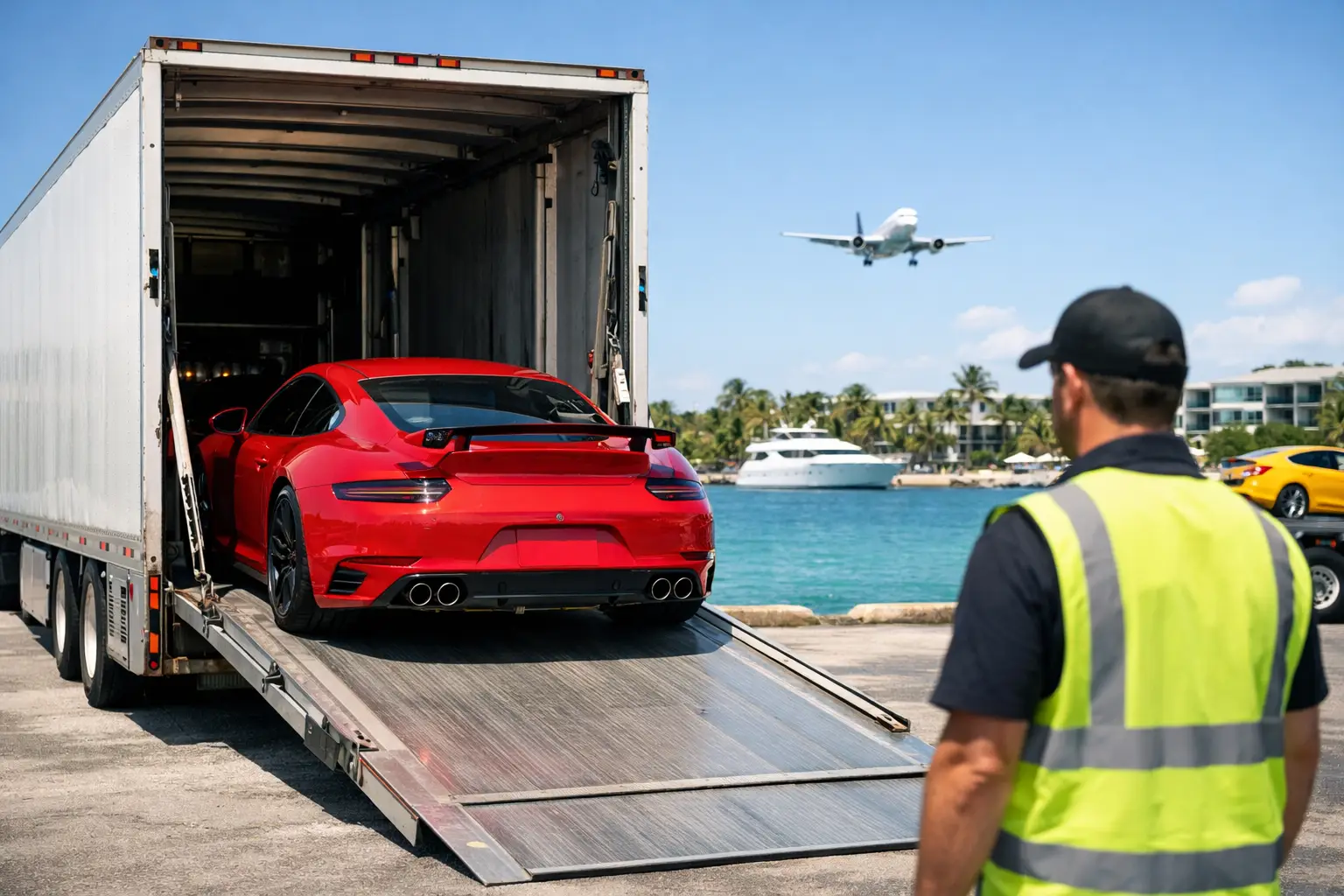
A performance car is rarely an impulse purchase, and performance car shipping to Cayman should never be treated as a standard freight booking. The right process protects more than the vehicle’s paintwork and panels. It protects its value, documentation, delivery timeline, and your confidence from the moment it leaves the seller through final handover.
For a Porsche, Ferrari, Lamborghini, McLaren, AMG, BMW M car, or carefully specified collector vehicle, the difference is in the details. Shipping method, port handling, export documentation, Cayman customs requirements, insurance, and final transport all need to be coordinated with the same level of care you apply when choosing the car itself.
Why Performance Car Shipping Requires More Control
A performance vehicle presents risks that ordinary vehicle shipping may not account for. Low ground clearance can make loading difficult. Wide tires, carbon-fiber components, aero packages, and splitters need proper clearance and securement. High replacement values also raise the stakes when there is a question about condition, handling, or transit coverage.
Then there is the commercial side of the transaction. A buyer may be working with a dealership in South Florida, a private seller elsewhere in the United States, an auction house, or a specialist broker. Each source can produce different paperwork, release procedures, and timing constraints. A vehicle cannot move efficiently until ownership documents, seller releases, shipping instructions, and export requirements are aligned.
For Cayman-bound imports, the objective is not simply to get the vehicle onto an island. It is to manage a controlled chain of custody from purchase through clearance and delivery, with clear accountability at every handoff.
Choosing the Right Shipping Method for Your Vehicle
The appropriate shipping method depends on the vehicle, its condition, its value, and your priorities. There is no single answer for every performance car.
Enclosed Container Shipping
For many high-value, low-clearance, or collectible vehicles, enclosed container shipping offers the highest degree of protection. The vehicle is loaded inside a sealed container, secured using appropriate equipment, and shielded from weather and routine exposure during transit.
This option is particularly well suited to cars with delicate exterior finishes, limited production models, vintage vehicles, or vehicles that will be shipped alongside parts, accessories, or approved personal effects. It also gives the loading team more control over how the car is positioned and secured.
Container shipping can carry a higher cost than other methods, and space availability may affect the sailing schedule. For many owners, that trade-off is justified by the added protection and controlled handling.
Roll-On/Roll-Off Shipping
Roll-on/roll-off, often called RoRo, moves operational vehicles by driving them on and off a specialized vessel. It can be a practical option for a standard-height performance vehicle that is in good running condition and does not require enclosed transport.
RoRo may be more cost-effective, but it involves more exposure to port environments and vessel handling. It is not generally the preferred choice for extremely low cars, non-running vehicles, concours-level classics, or cars with particularly vulnerable aero components. The decision should be based on the actual vehicle rather than a blanket assumption that one method is always better.
Consolidated or Dedicated Container Service
A consolidated container allows multiple compatible shipments to share container space. This can be an efficient approach when timing is flexible and the vehicle is suitable for shared movement. A dedicated container gives one vehicle or one client’s cargo exclusive use of the space, which can offer more scheduling and loading control.
The right choice comes down to value, urgency, vehicle dimensions, and the level of control you want over the shipment. A proper consultation should clarify those factors before shipping instructions are issued.
Prepare the Car Before It Leaves the Seller
Condition documentation should begin before the vehicle reaches a port. Request detailed, date-stamped photographs of every exterior panel, wheels, tires, windshield, interior, odometer, engine bay, and any existing imperfections. For a specialty vehicle, record the condition of the front lip, rocker panels, rear diffuser, exhaust tips, and carbon-fiber trim separately.
Confirm that the vehicle is mechanically ready for its selected shipping method. If it will move by RoRo, it must generally start, steer, brake, and be safe to drive during loading. If the vehicle has an unusually low ride height, an aftermarket exhaust, a front-axle lift system, or special instructions for entering ramps, provide those details in advance.
Remove loose personal items unless they have been specifically approved and declared. Personal effects can create customs complications, increase the risk of loss, and affect shipping terms. Spare keys, charging cables, tool kits, manuals, and removable accessories should be accounted for in writing.
It is also wise to confirm the fuel level and battery requirements with the shipping coordinator. Ports and carriers may apply their own operational rules, particularly for electric or hybrid performance vehicles.
Documentation Is Where Delays Begin or End
The car may be immaculate, but incomplete documentation can still keep it from moving or clearing on schedule. A professionally managed import begins by reviewing the documents before the vehicle is collected, not after it has arrived at the port.
The typical file may include the original title or ownership document, bill of sale or purchase invoice, lien release where applicable, identification documents, shipping authorization, and vehicle details such as the VIN, make, model, year, and purchase value. Depending on the origin and transaction, additional export paperwork may be required.
Accuracy matters. The VIN must match across every document. Names, addresses, declared values, and ownership details should be consistent. Discrepancies that feel minor on paper can trigger questions, extra review, storage charges, or clearance delays.
For cars purchased through a dealer, ask early whether the title is available or whether it is still being processed. For private purchases, ensure the seller can provide a clean, transferable ownership document. If there is financing involved, establish the lender’s export and title-release process before committing to a departure date.
Understand Landed Cost Before You Commit
The purchase price is only one part of the investment. Your landed cost may include international shipping, port and handling charges, customs duty, government fees, local processing, insurance, and final delivery. The exact total depends on the vehicle’s value, specifications, origin, shipping method, and current Cayman requirements.
This is why a cost estimate should be prepared before the vehicle is purchased whenever possible. It allows you to compare several vehicles on a true landed-cost basis rather than choosing based on the seller’s price alone. A lower-priced car can become the more expensive choice if it has documentation issues, needs specialized handling, or carries higher import costs.
Transparency is especially valuable when buying from a distance. You should know which charges are estimated, which are fixed, what assumptions are being used, and what could change the final figure. Clear cost planning reduces surprises and gives you a more confident purchasing decision.
Customs Clearance Should Be Planned Before Arrival
Cayman customs clearance is not an afterthought. It is a defined stage of the import process that requires the correct declarations, supporting documents, valuation information, and compliance review. Waiting until the vehicle is already at the port can create unnecessary pressure and expense.
A coordinated import partner reviews the shipment file, prepares for the clearance process, and keeps you informed of what is needed. This is particularly useful for buyers who are new to Cayman, are importing their first high-value vehicle, or are managing a purchase while living overseas.
The goal is complete professionalism from arrival through release. That means avoiding preventable document gaps, responding promptly to questions, and ensuring the vehicle is properly released before arranging final transport.
Final Delivery Deserves the Same Care as Ocean Transit
A car can complete an ocean voyage without incident and still be put at risk during the last few miles. Final delivery should be arranged with the vehicle’s clearance, ride height, location, and access conditions in mind.
A low-slung coupe may need a suitable carrier and careful ramp approach. A collector car may need delivery at a specific time when you or an authorized representative can inspect it. If the destination has a steep driveway, narrow access, or restricted parking, those details should be known before dispatch.
At handover, inspect the car against the pre-shipment condition record. Verify the VIN, keys, accessories, mileage, and visible condition before signing final delivery paperwork. This is not about expecting a problem. It is about closing the process with the same discipline used at the start.
A Better Standard for High-Value Imports
The best import experience is measured by what you do not have to manage alone: chasing documents, interpreting port instructions, estimating duties without clarity, or wondering where your vehicle is at each stage. Waypoint Imports coordinates the moving parts with precision, from early consultation and shipping planning through customs clearance and final delivery.
Your performance car should arrive ready for the reason you bought it, whether that means a weekend drive on Grand Cayman, a place in a private collection, or the first step in a new chapter on the islands. Give the import process the same careful attention you gave the car, and every mile after delivery starts on the right footing.
