

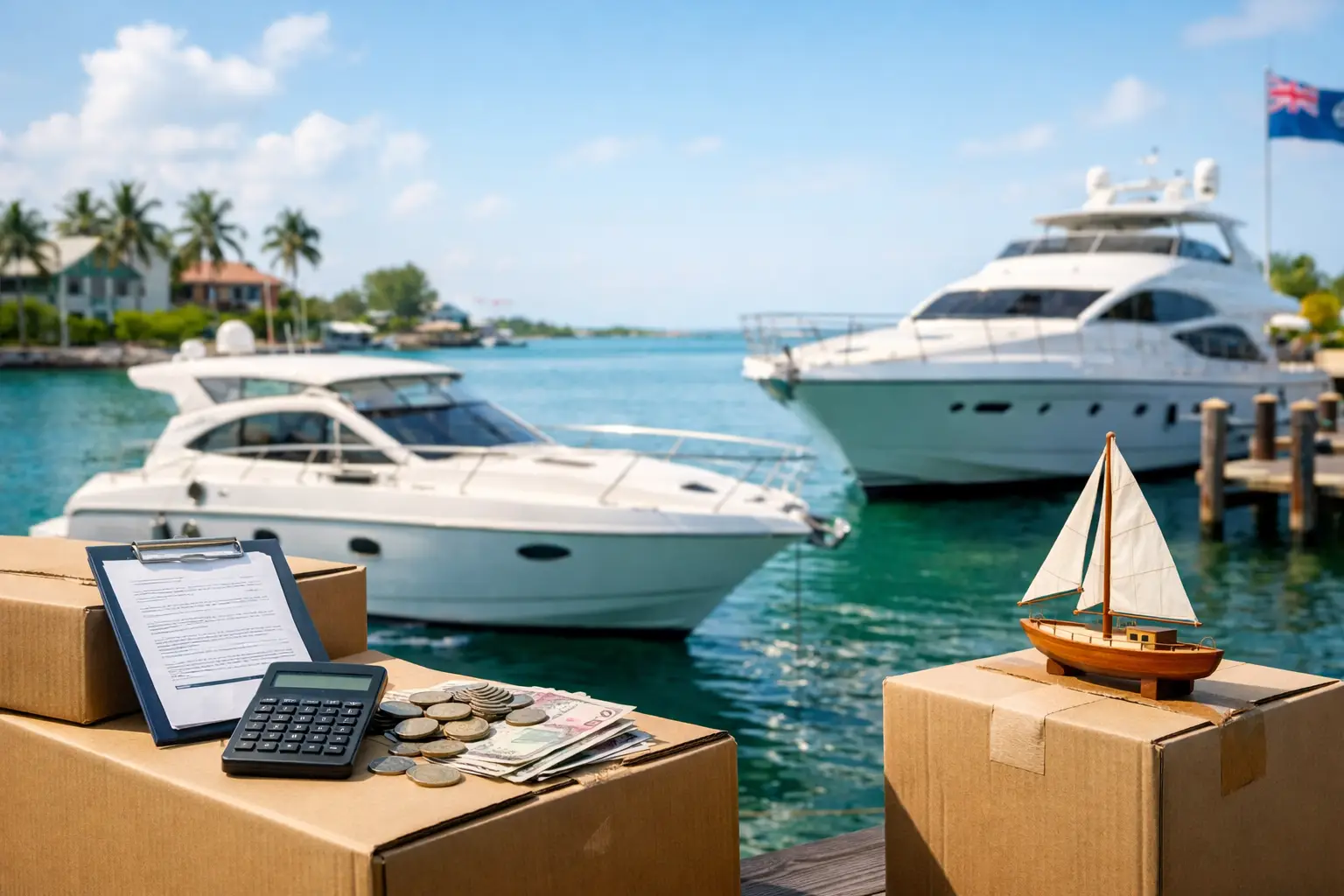
A boat can look like an exceptional purchase until the landed cost is unclear. Import taxes on boats in Cayman Islands are not a figure to estimate from the purchase price alone. The vessel’s classification, declared customs value, shipping arrangement, documentation, and intended use can all affect what is payable before it can be released.
For a center-console, sportfisher, tender, sailing yacht, or larger pleasure vessel, the right approach is to establish the full cost before funds are committed and before the boat is loaded for shipment. That protects the transaction, prevents avoidable delays at the port, and gives you control over a significant investment.
How import taxes on boats in the Cayman Islands work
Cayman does not apply a broad value-added tax system in the way some jurisdictions do. For most private boat imports, the primary government charge to plan for is import duty, assessed by Cayman Customs and Border Control under the applicable tariff classification.
A 22 percent duty figure is commonly used as an initial planning assumption for many pleasure vessels. It should not be treated as a final landed-cost quote. The applicable rate must be confirmed against the current tariff and the specific facts of the import, including the vessel type, equipment, origin, and whether a concession, exemption, or temporary-import arrangement may apply.
Duty is also only one part of the financial picture. Port charges, cargo handling, customs processing, brokerage or coordination services, inland transport, storage if clearance is delayed, and registration-related costs may all be separate from the import duty itself. A disciplined estimate separates government charges from shipping and operational charges so there is no confusion about what each line item covers.
Customs value is more than the asking price
The purchase price on a bill of sale matters, but Cayman Customs may assess duty using the customs value of the import rather than simply the number agreed between buyer and seller. In practical terms, the value considered can include the cost of the boat along with freight and insurance to Cayman, commonly described as a CIF basis: cost, insurance, and freight.
For example, a vessel purchased for $250,000 in South Florida does not necessarily have a dutiable value of $250,000. If the shipment, marine insurance, and related transport costs bring the customs value higher, the duty calculation may be applied to that higher amount. This is why a quote based only on a seller’s listing price is incomplete.
Customs may also question a declared value if the paperwork does not support it or if it appears inconsistent with the vessel’s condition, specification, market position, or transaction history. A discounted purchase can be legitimate, particularly for a vessel needing refit work, but the file should clearly show why the price was lower. Survey reports, repair estimates, listing history, bank records, and correspondence can be useful supporting evidence when appropriate.
What to include in a realistic landed-cost estimate
Before shipping, build the estimate around the entire transaction. This includes the agreed vessel price, trailer or cradle if imported with the boat, freight to Cayman, transit insurance, anticipated import duty, port and handling charges, customs coordination, and delivery to the final location.
Do not overlook accessories. A tender, outboard, electronics package, spare engine, water toys, or parts shipped separately may need to be declared and classified independently. The same is true of a trailer. A trailer may not receive the same tariff treatment as the vessel it supports, so combining every item under one broad estimate can create a shortfall.
For high-value boats, the cost of getting the calculation right is modest compared with the expense of an unexpected assessment, storage charges, or a vessel held pending additional documentation.
The documents that support a clean clearance
Customs clearance is faster when the transaction is documented as a complete, consistent story. The core file usually starts with the signed bill of sale or commercial invoice, proof of payment, vessel registration or title documents, shipping paperwork, and a clear description of the make, model, year, hull identification number, engines, and major equipment.
Freight and insurance documents are particularly relevant when customs value is being established. If the boat is being shipped on a yacht carrier, by container, on a flat rack, or via roll-on/roll-off service, the transport method should be reflected accurately in the shipping documents.
A current marine survey can be valuable for older, customized, damaged, or refitted vessels. It is not a substitute for purchase documents, but it can help establish condition and specifications. For vessels purchased at auction or from an estate, keep the auction record, condition report, and payment trail together rather than attempting to recreate the file after arrival.
Accuracy matters more than presentation. A polished invoice with vague details is less useful than a straightforward file that ties the boat, the seller, the buyer, the payment, and the shipment together without discrepancies.
Permanent import, temporary entry, and concessions
Not every vessel entering Cayman is being permanently imported. A privately owned boat may arrive for a limited stay, and charter, commercial, or visiting-vessel circumstances can introduce rules that differ from a permanent local import. The correct customs treatment depends on the vessel’s purpose, ownership, length of stay, and operational plans.
Temporary entry should never be assumed simply because a boat will leave again later. Likewise, a buyer should not assume that offshore ownership, foreign registration, or a recent purchase outside Cayman eliminates local duty exposure. Customs treatment follows the details of the import and use, not just the flag on the stern.
There may also be specific concessions or relief provisions in limited situations. Eligibility is fact-specific and should be verified before the boat is shipped. Trying to change the declared purpose of the import after arrival can create delays and unnecessary scrutiny.
Why timing affects cost and control
The cleanest import files are prepared before the vessel departs the United States or another origin port. Last-minute corrections are especially difficult when a boat arrives without an original title, a complete bill of sale, engine details, or a freight invoice.
Timing also affects storage exposure. If cargo cannot be released promptly because documents are missing, values need clarification, or funds are not ready for duty and charges, port storage can begin to add cost. This is avoidable in many cases through a pre-shipment review and a confirmed clearance plan.
Owners should also consider the practical arrival sequence. Who will receive the vessel? Is a crane, launch service, trailer, secure storage space, or marina berth needed? Is the boat arriving with fuel restrictions, loose gear, or items that require separate handling? These are operational questions, but they directly affect the smoothness and security of the import.
Common mistakes that lead to surprises
The most expensive mistakes are usually not dramatic. They are assumptions made early in the purchase process: using only the boat’s sale price to budget duty, relying on an outdated tariff rate, treating freight as an afterthought, or accepting incomplete seller paperwork because the deal is moving quickly.
Another common issue is undervaluing the vessel. Declaring a lower amount than the documented transaction may appear to reduce duty, but it can lead to reassessment, a delayed release, penalties, and a more difficult clearance process. For a valuable marine asset, the risk is not worth the perceived saving.
Buyers also sometimes focus on tax and overlook condition. A boat that needs substantial work may still carry duty based on its properly supported customs value. The repair budget, survey findings, and import cost should be evaluated together before the purchase becomes final.
Plan the import before you buy
The best point to assess import taxes is before making an offer, not when the boat is approaching Grand Cayman. Request the seller’s invoice, title or registration, hull and engine details, survey information, and a freight indication early. With those details, an import specialist can identify the questions that need an answer and provide a grounded estimate of the likely landed cost.
Waypoint Imports coordinates boat imports with that sequence in mind: documentation first, transport and customs requirements aligned, then arrival and final delivery managed with clear accountability. The goal is not simply to get the boat to Cayman. It is to protect the asset and keep every stage controlled.
A boat purchase should end with confidence at the dock, not a customs bill you did not plan for. Confirm the classification, value basis, documents, and arrival plan before shipment, and the process is far more likely to remain smooth, secure, and predictable.
