

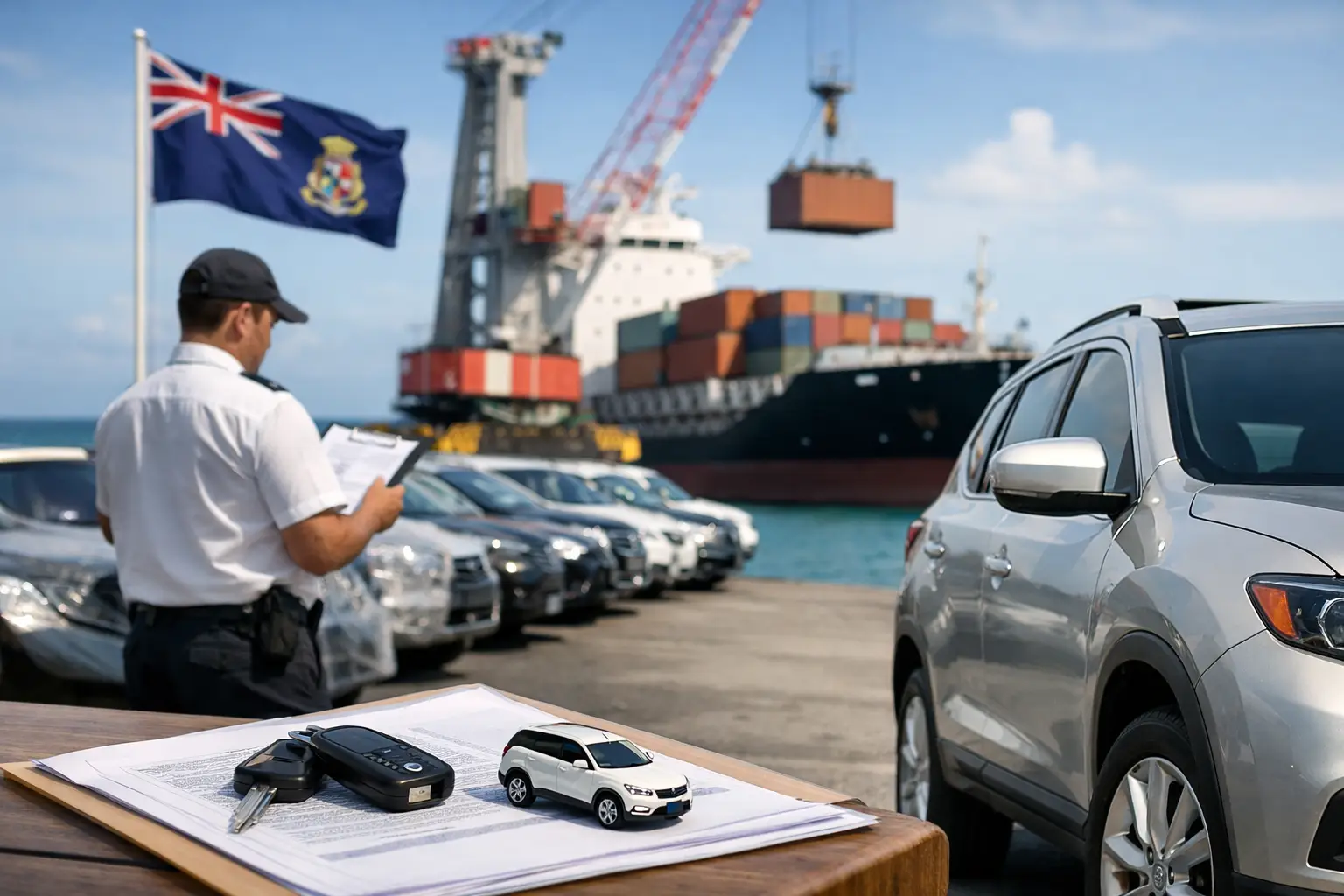
Bringing a vehicle into the Cayman Islands can go smoothly, or it can become expensive and slow for reasons that are usually preventable. Most problems start long before the vessel arrives – with missing documents, incorrect valuation, or assumptions about duties and inspections. If you are trying to understand customs clearance requirements cayman vehicles must meet, the most useful place to start is not at the port. It is with preparation.
For private owners, collectors, expatriates, and buyers of luxury or specialty vehicles, customs clearance is not just a paperwork step. It affects total landed cost, delivery timing, and whether your vehicle is released without avoidable complications. The higher the value of the asset, the more important disciplined handling becomes.
What customs clearance requirements Cayman vehicles typically involve
At a practical level, customs clearance for vehicles in Cayman centers on proving what the vehicle is, what it is worth, who owns it, and whether it complies with local import and licensing expectations. That sounds straightforward, but there is usually more detail beneath each point.
Customs will generally expect a complete and consistent document file. That often includes the title or proof of ownership, purchase invoice or bill of sale, shipping documents, identification for the importer, and any supporting records needed to confirm value. If the vehicle was recently purchased, the declared amount needs to align with the transaction evidence. If it is a classic, rare, modified, or high-spec vehicle, valuation may require more care because the market value is not always obvious from a simple sale document.
This is where many importers underestimate the process. A vehicle is not cleared based only on what the buyer hopes it is worth. Customs authorities may examine the declared value against the available paperwork and the type of vehicle being imported. If anything appears incomplete or inconsistent, clearance can slow down while questions are resolved.
The documents that matter most
The strongest customs files are consistent from start to finish. The seller name on the invoice should match the transfer records. The vehicle details should align across the title, shipping paperwork, and purchase documents. VIN accuracy matters. Small errors create larger delays when a shipment is ready for release.
In most cases, the core document set includes proof of purchase, proof of ownership, freight documents, and importer identification. Depending on the vehicle and transaction structure, additional records may be needed to support value, origin, or intended use. If the vehicle is financed, recently auctioned, or purchased through a dealer or broker, the paperwork trail may need extra attention.
For high-value imports, keeping a clean paper trail is not just administrative discipline. It protects the client from valuation disputes, release delays, and avoidable storage costs while the vehicle sits waiting.
Why valuation is often the sticking point
Valuation is one of the most sensitive parts of the clearance process because duties and import taxes are tied to it. If the declared value appears low for the make, model, year, or condition, customs may ask for additional support. That does not always mean there is a problem, but it does mean time can be lost if the importer is not ready to substantiate the number.
This becomes more nuanced with collector cars, limited-production models, restored classics, and performance vehicles with substantial upgrades. A standard invoice may not tell the full story. The same is true when a buyer got an unusually favorable deal from a family member, a distressed sale, or a private seller who priced the vehicle below broader market expectations.
In those cases, accuracy matters more than optimism. A well-prepared import file anticipates questions before they are asked.
Duties, fees, and landed cost expectations
Most vehicle owners want the same answer early: what is this really going to cost me by the time the vehicle is released and delivered? That is the right question, because customs charges are only part of the landed cost.
There may be import duties, customs processing charges, port or handling fees, and inland delivery considerations after release. Depending on the type of vehicle and how it is shipped, the cost structure can vary. A standard personal vehicle imported in straightforward condition is one thing. A luxury SUV, low-clearance sports car, restored classic, or specialty unit often requires tighter coordination and sometimes more protective handling.
The trade-off is simple. You can estimate broadly, or you can calculate carefully. Broad estimates are fast, but they often miss the details that create frustration later. Careful costing takes more work upfront, but it gives the owner control.
Timing matters more than most importers expect
Vehicle clearance is not only about whether the documents are technically correct. It is also about whether they are available at the right time. A complete file delivered late can still create delay.
Ideally, customs documentation should be reviewed before the shipment arrives. That allows time to correct discrepancies, confirm values, and organize any supplementary records. Waiting until the vehicle is already at the port compresses decision-making and increases the risk of storage charges or extended release timelines.
This matters even more for clients importing from South Florida or other common US export points, where the shipping side may move quickly while the receiving side still depends on complete customs readiness. Fast shipping does not fix incomplete entry preparation.
Common causes of delay
Most delays come from predictable issues. A missing title, an unsigned bill of sale, a mismatch in VIN details, unclear ownership history, or incomplete value support can all slow release. So can assuming that prior import experience with another jurisdiction applies the same way in Cayman.
There are also practical issues beyond paperwork. If the vehicle arrives with damage concerns, unusual modifications, or questions around condition, that can create more review. The same applies if the file suggests one use but the vehicle configuration suggests another. Details matter, especially when expensive assets are involved.
How inspections and compliance affect release
Not every vehicle import presents the same level of complexity. Some clear with minimal issue when the paperwork is accurate and the vehicle is standard. Others require more coordination because of age, condition, modifications, or intended registration pathway.
Inspections and compliance checks can be part of the broader process depending on the vehicle and the circumstances of import. That may involve confirming identifying details, reviewing condition, or ensuring the vehicle can proceed toward local registration requirements after customs release. Customs clearance and road-use compliance are related, but they are not always the same step.
This distinction matters for buyers of specialty and enthusiast vehicles. A car can be legitimate to purchase and ship, yet still require extra planning to move efficiently through clearance and onward registration. The more unusual the asset, the less wise it is to rely on assumptions.
Why professional coordination reduces risk
Some owners are comfortable gathering documents and managing communication themselves. For straightforward imports, that may work. But as the vehicle value rises, or the transaction becomes less standard, the cost of one mistake increases quickly.
Professional coordination helps by tightening the entire chain before problems appear. That includes document review before shipment, realistic landed cost forecasting, valuation support, communication with relevant parties, and organized release planning once the vehicle arrives. The goal is not just to get the car off the dock. It is to protect timing, compliance, and the condition of a significant asset.
That is especially relevant when the owner is off-island, buying remotely, or trying to coordinate shipping, customs, and final delivery without local operational support. In those cases, clarity is not a luxury. It is part of risk control.
Preparing before you ship
The best approach to customs clearance requirements cayman vehicles must satisfy is to treat customs as part of the purchase decision, not something to figure out after the sale. Before the vehicle ships, confirm the ownership documents are in order, the transaction record is complete, the shipment details are accurate, and the likely duties and fees are understood.
It also helps to be realistic about the vehicle itself. Modified cars, classic units, salvaged vehicles, and premium imports often need more than a basic shipping booking. They need tighter documentation and closer process management. A smooth import is usually the result of decisions made early, not luck at the port.
For owners who want certainty, the value of a managed process is simple: fewer surprises, cleaner compliance, and a vehicle that arrives handled with precision from booking through release. Waypoint Imports is built around that exact standard.
When you are importing a vehicle into Cayman, the smartest move is rarely to move faster. It is to move with control, so every document, cost, and handoff is aligned before your vehicle ever arrives.
