

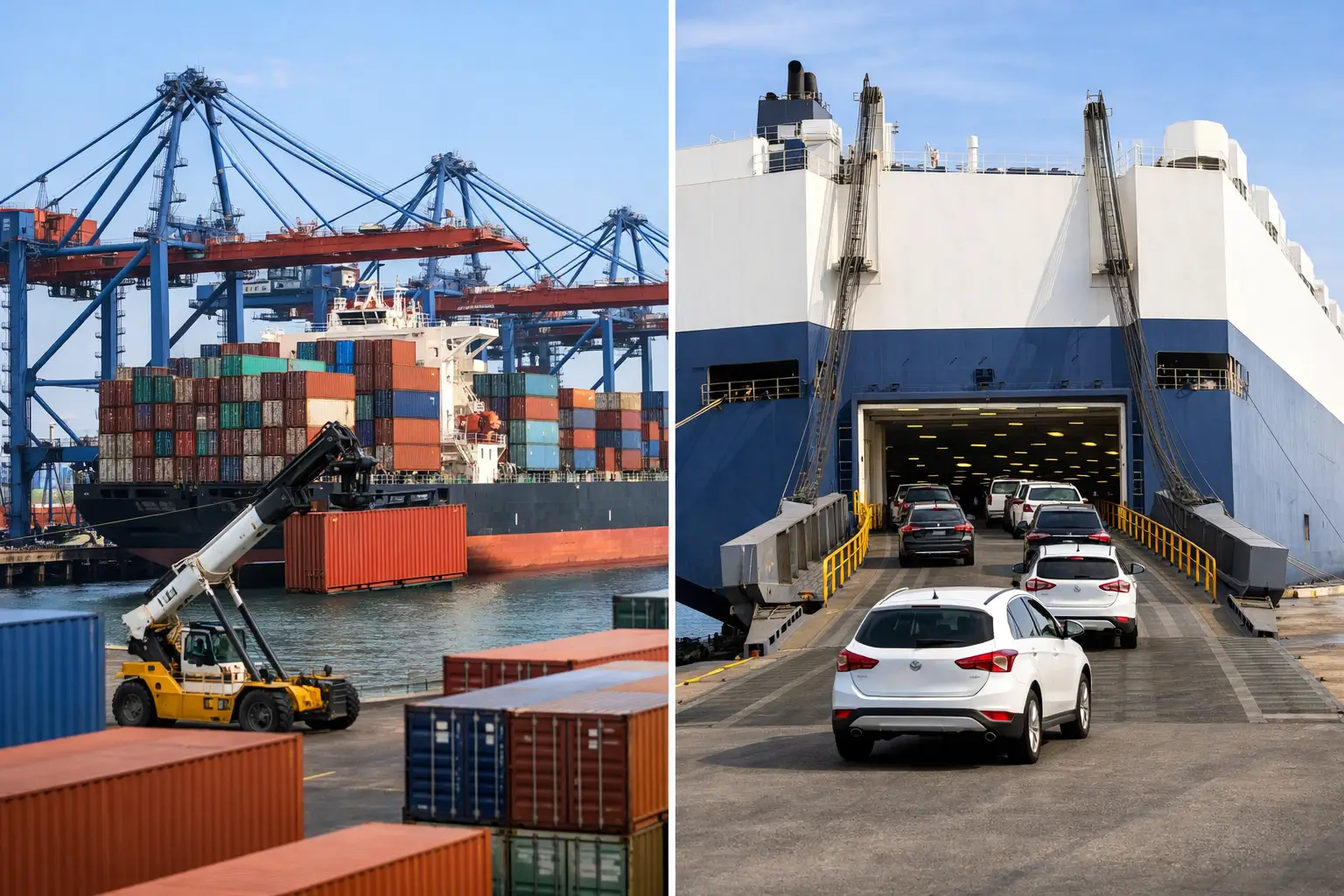
A vehicle arriving in Grand Cayman is not simply another package. The shipping method affects how it is handled at origin, what can travel with it, how it is protected at sea, and the information needed before customs clearance. In the container shipping vs ro ro decision, there is no universal winner. The right choice depends on the item, its condition, the route, and the level of protection and flexibility your shipment requires.
Container Shipping vs Ro Ro: The Core Difference
Container shipping places a vehicle, equipment, or cargo inside a sealed steel container for ocean transport. Depending on the shipment, the item may be secured on its wheels, loaded with professional lifting equipment, or packed alongside approved freight. Once loaded and sealed, the container generally remains closed until it reaches the destination handling point.
Ro ro, short for roll-on/roll-off, is designed for wheeled cargo. A drivable vehicle is driven onto a specialized vessel, secured in a designated deck area, and driven off at destination. Trailers, machinery, and certain boats on trailers may also move by ro ro when they can be safely rolled or towed on and off the ship.
The distinction is straightforward: container shipping encloses the cargo, while ro ro moves it as a vehicle. The practical differences become clearer when you consider protection, cargo rules, scheduling, and handling at both ends of the journey.
When Container Shipping Makes More Sense
A container is often the stronger fit when protection and control are the priority. The enclosed space shields cargo from salt air, weather, and the activity of a vehicle deck. It is particularly useful for high-value vehicles, collector cars, non-running vehicles, motorcycles, parts, tools, or equipment that needs to travel with related freight.
Containers also offer more flexibility for mixed shipments. A customer relocating to Cayman may be able to ship a vehicle alongside carefully packed household goods, subject to carrier requirements, safe loading practices, and customs rules. A contractor importing equipment may use a container to keep machinery, accessories, and approved job-site materials together under one shipment plan.
That flexibility requires disciplined preparation. Cargo must be properly blocked, braced, and secured so it cannot shift during transit. The container size must suit the dimensions of the vehicle or equipment, including mirrors, roof racks, ground clearance, and any nonstandard features. A larger container can accommodate more, but it also changes the freight plan and handling requirements.
Container shipping can be the only practical option when a vehicle cannot be driven. This includes project vehicles, damaged vehicles, classics that should not be moved under their own power, and machinery without road-going capability. It can also be appropriate for compact boats or personal watercraft that fit safely inside a container. Larger boats usually require a separate transport method based on their size, hull design, and cradle or trailer requirements.
When Ro Ro Is a Better Fit
Ro ro is purpose-built for standard, operable vehicles. If you are importing a car, SUV, pickup, van, or other self-propelled vehicle that meets the carrier’s condition requirements, the process can be direct: the vehicle is delivered to the departure terminal, loaded onto the vessel, secured for the voyage, and released through the destination process.
For many standard vehicle imports, ro ro avoids the work of arranging a container, loading the vehicle inside it, and later unloading it. It is a practical option when the vehicle is the entire shipment and available sailing schedules align with your plans.
The trade-off is that ro ro vessels operate under stricter rules about what stays inside the vehicle. Personal belongings, loose tools, commercial inventory, and unapproved accessories are generally not permitted. The vehicle should be clean, empty, and in the required operating condition. Fuel levels, batteries, alarms, and any signs of damage or fluid leaks may also need attention before terminal acceptance.
Ro ro is not suitable for every vehicle. A non-running car, a vehicle with significant mechanical issues, or a vehicle that sits too low to safely use the vessel ramp may need container transport or another specialized arrangement. Carrier standards and route availability matter, so eligibility should be confirmed before you commit to a purchase or collection date.
Protection, Access, and Handling
The most visible advantage of a container is its enclosed environment. It provides a physical barrier around the cargo and limits access during the ocean leg. This does not remove the need for careful inspection, photographs, insurance decisions, or professional loading. It does mean the vehicle or freight is traveling inside a dedicated enclosed unit rather than parked on a shared vehicle deck.
Ro ro handling is different, not inherently casual. Vehicles are driven and secured by trained terminal teams using vessel-specific procedures. They are stored in designated areas of the ship and may be moved as part of loading and discharge operations. For a normal, operable vehicle, this handling model is exactly what the service is designed to support.
Your choice should reflect the item’s condition and value, but also your comfort with the handling process. A daily-driver vehicle with no accompanying cargo may be well suited to ro ro. A restored classic, a luxury vehicle, or equipment with sensitive components may justify the additional planning of container shipping.
Timing Depends on More Than the Vessel
Customers sometimes compare only the sailing date, but the full timeline starts earlier. Container shipping requires time to reserve equipment, deliver or receive the cargo, load it safely, complete export documentation, and position the container for sailing. Ro ro requires the vehicle to meet terminal cutoff dates and be delivered in acceptable condition before loading.
At destination, both methods require coordinated release, customs clearance, and collection or delivery arrangements. Public holidays, vessel schedules, port congestion, document timing, inspections, and local handling capacity can all affect the process. A well-managed shipment plan gives you visibility into these stages rather than treating the departure date as the only milestone.
For Cayman imports, it is also wise to confirm import duty, documentation, and vehicle registration requirements early. The shipping method does not change the need for accurate purchase records and vehicle details. It can, however, affect the documents, handling charges, and coordination steps involved in bringing the shipment from port to final delivery.
How Costs Should Be Compared
A useful comparison looks beyond a single freight quote. Container shipping may involve container positioning, loading, securing materials, terminal handling, and unloading at destination. Ro ro may involve vehicle terminal charges, port handling, and route-specific requirements. Either method can be the more sensible option depending on the cargo and the sailing available.
Ask for a clear estimate that separates the major stages: origin handling, ocean freight, destination handling, customs clearance support, government charges, and delivery where applicable. If a container will carry a vehicle plus other approved goods, compare the total shipment plan rather than assigning the full container cost to the vehicle alone.
It is also worth considering the cost of a poor fit. Sending a non-running vehicle through a service intended for operable cars, or trying to place loose household items inside a ro ro vehicle, can lead to delays, rejected cargo, or last-minute changes. Choosing the right method at the outset creates a smoother, more predictable experience.
Questions to Answer Before You Book
Before selecting container shipping or ro ro, confirm whether the vehicle runs reliably, whether anything needs to travel with it, and whether the route offers a suitable sailing. Measure oversized equipment accurately and disclose modifications, damage, or mechanical limitations early. Clear information allows the shipment to be planned with precision instead of adjusted after it reaches the terminal.
You should also keep the purchase invoice, title or ownership documents, vehicle identification details, and any required export paperwork organized from the beginning. Uploading these records early helps your freight and customs team review the shipment before it reaches a critical cutoff.
Waypoint Imports can coordinate the shipping method, customs clearance, tracking, and local delivery plan in one place, with updates that keep you informed as the shipment moves through each stage.
The most useful next step is not choosing the method with the shortest description or the earliest advertised sailing. Start with the condition of your cargo, what must travel with it, and what a properly managed arrival in Cayman requires. With those details confirmed early, your import can be handled with clarity and complete professionalism.
