

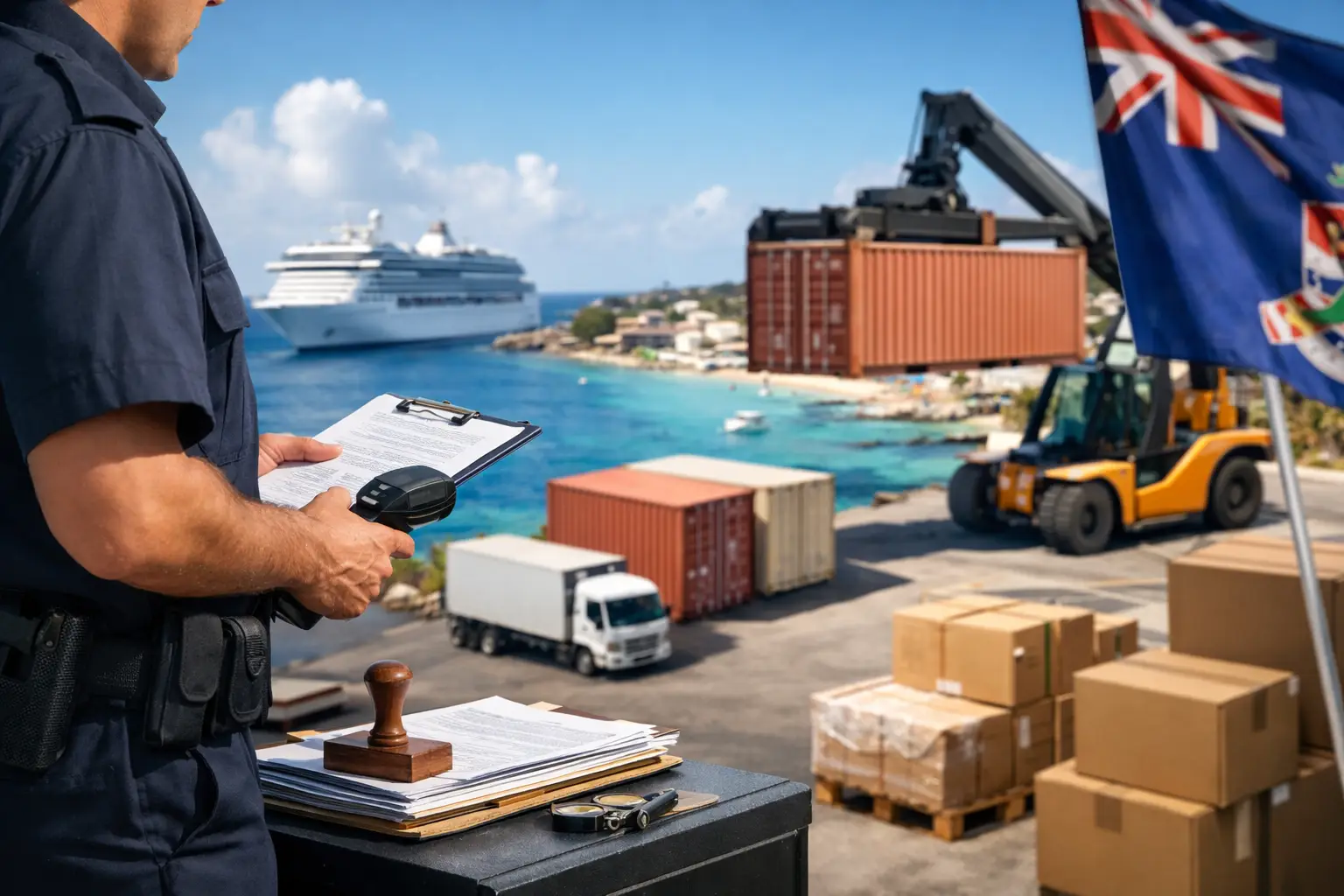
A vehicle or boat can arrive at the port exactly on schedule and still be delayed by one missing document, an inconsistent value, or an import requirement addressed too late. This customs clearance requirements guide is designed for buyers bringing high-value vehicles and marine assets into the Cayman Islands who want the process handled with precision from purchase through final delivery.
Customs clearance is not simply a final signature before release. It is the point where the asset, its paperwork, its declared value, and its intended use must align. Good preparation protects more than a delivery date. It protects your investment, prevents avoidable storage costs, and gives you a clear view of the landed cost before your asset is in transit.
What Customs Clearance Means for Your Import
Customs clearance is the formal process that allows an imported vehicle, boat, yacht, or other asset to enter Cayman legally. It includes presenting the required shipping and ownership documents, declaring the goods accurately, determining applicable duties and taxes, and satisfying any additional government requirements before release.
For a standard personal vehicle, the process may appear straightforward. For a luxury vehicle, collector car, performance model, boat, or yacht, the details tend to carry more weight. A custom specification, aftermarket modification, unusual title history, purchase through a dealer, or complex ownership structure can all require closer coordination.
The correct approach depends on the asset and the transaction. A vehicle purchased from a South Florida dealer may have a different document trail than a privately purchased classic car. A small personal boat and a large yacht may require different operational planning, even when both are destined for private use. The goal is not to force every import into one checklist. It is to identify what applies before shipping is booked.
Customs Clearance Requirements Guide: Core Documents
The paperwork must tell one consistent story: who owns the asset, what it is, what it cost, where it is coming from, and how it arrived. Customs authorities and related agencies may request additional documents depending on the circumstances, but the core file commonly includes the following:
- Proof of ownership, such as the original title, registration, bill of sale, or other ownership record appropriate to the asset.
- A commercial invoice or purchase agreement showing the buyer, seller, purchase price, currency, and a clear description of the vehicle or vessel.
- Shipping documents, typically a bill of lading, identifying the shipment, carrier, port details, and consignee.
- Identification and importer details needed to complete the entry and support the declared ownership.
- Relevant specifications, serial numbers, vehicle identification number, hull identification number, engine details, or other identifying records.
- Any permits, registrations, inspections, or supporting documents required for the particular asset or intended use.
Accuracy matters more than volume. A purchase invoice with a vague description, a bill of lading using a different consignee name, or a title that does not match the sales documentation can create questions that take time to resolve. For high-value imports, clean documentation is part of asset protection.
Keep original records secure, provide clear copies early, and avoid making last-minute changes to the consignee or purchase details after shipping instructions have been issued. If ownership is held by a company, trust, or other entity, establish that structure clearly at the outset so the clearance file reflects it correctly.
Declared Value, Duties, and Landed Cost
Duty calculations are one of the areas where assumptions can become expensive. The total cost of an import is broader than the purchase price. It may include freight, insurance, customs duty, government fees, port handling, clearance coordination, delivery, and any work required to prepare the asset for local registration or use.
The valuation used for customs purposes should be supported by reliable documentation. Trying to estimate a lower value, relying on an informal message from a seller, or separating charges without a clear commercial basis can invite scrutiny and delay. The right figure depends on the transaction, the asset type, the applicable customs treatment, and the documents available.
Rates, fees, and procedures can change. Buyers should confirm current duty treatment before committing to a purchase, particularly when comparing several models or deciding between a newer asset and a specialty import. This is where an import cost estimate becomes practical rather than theoretical: it allows the buyer to evaluate the full commitment before the vehicle or vessel is loaded for shipment.
Timing Starts Before the Asset Leaves
The most effective customs work happens before the ship departs, not after it reaches Grand Cayman. Once an asset is in transit, there is less flexibility to correct missing paperwork, clarify a sale, or change shipping arrangements without added cost and complication.
Begin with a pre-shipment review. Confirm that the asset is eligible for import and appropriate for its intended use. Verify the identity details against the title, invoice, and shipping instructions. Review the estimated landed cost. Then make sure the consignee information and ownership documents are complete before cargo is handed to the carrier.
Timing also affects storage and final delivery. Port release does not automatically mean the asset can move immediately. Collection scheduling, secure transport, local registration steps, marina coordination, and delivery access should be planned in sequence. This is especially relevant for vehicles requiring enclosed or specialized handling and boats requiring careful movement from port to berth or storage.
Common Issues That Delay Release
Most delays are preventable, but they are rarely caused by only one problem. A late bill of lading may coincide with an invoice that lacks detail. An imported vehicle may arrive before a required inspection or registration step has been planned. A boat may be cleared, but its onward transport or marina arrangements may not be ready.
The most common pressure points are incomplete ownership records, inconsistent names or identifying numbers, unclear declared values, documents submitted too close to arrival, and assumptions about duty or approval requirements. Modifications can also deserve extra attention. Performance upgrades, nonstandard lighting, steering configuration, engine changes, or unusual marine equipment may affect what needs to be reviewed before shipment.
A private sale requires particular discipline. Unlike a dealership transaction, there may be no standardized invoice package or administrative team supplying the records. The buyer should ensure the sales agreement identifies the asset precisely, confirms the price and parties, and is supported by the appropriate ownership transfer documents.
A Controlled Process for Vehicles and Boats
A professionally managed import process creates a single chain of accountability. It begins with consultation and document review, followed by shipping coordination, pre-arrival customs preparation, duty and fee planning, clearance management, release, and secure final delivery.
That structure is valuable because customs clearance does not operate in isolation. A clearance coordinator needs accurate shipping details. The shipping plan should account for the asset’s size, condition, and protection needs. Final delivery should be scheduled around release status, not assumed dates. When these stages are managed together, the importer receives clearer updates and fewer surprises.
For collectors and owners of premium assets, protection during movement is as relevant as compliance. The least expensive shipping option is not always the best choice for a low-clearance vehicle, a classic automobile, a high-performance car, or a vessel with sensitive equipment. The right handling method depends on value, condition, route, timing, and risk tolerance.
Waypoint Imports coordinates these moving parts with a disciplined, transparent approach, giving clients one experienced point of contact from initial planning through delivery.
Before You Commit to the Purchase
Ask for the title or ownership record, a detailed invoice, identifying numbers, current photos, and a full description of modifications before money changes hands. Confirm where the asset is located, whether it can be released for export, and whether the seller can provide original documents on the required timeline.
Then assess the complete import cost and logistics plan, not just the purchase price. A well-priced vehicle or boat can become a poor decision if its documentation is difficult to resolve, its shipping requirements are underestimated, or its duty exposure was never properly considered.
The best time to solve a customs question is while you still have choices. With the right records, realistic cost planning, and professional coordination in place, clearance becomes a controlled step in bringing your asset home – not the moment an otherwise excellent purchase becomes uncertain.
