

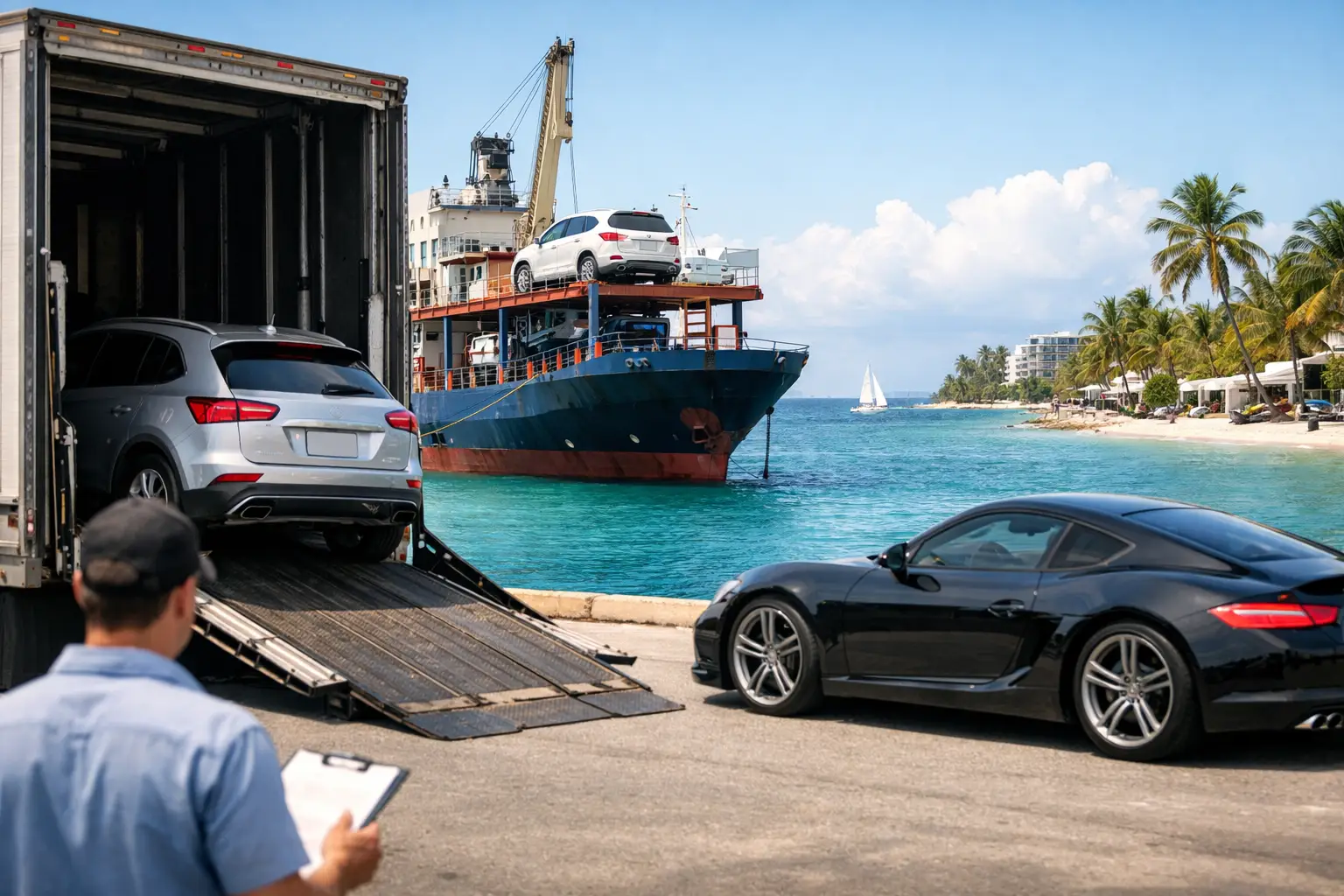
A vehicle can look perfect in a South Florida showroom and still become a costly, time-consuming problem before it reaches your driveway in Cayman. The purchase is only one part of the decision. Export arrangements, ocean transport, shipping documentation, customs requirements, duties, port handling, and final delivery all need to align. A door to door vehicle import service brings those moving parts under one accountable process, so your vehicle is handled with precision from the point of purchase to delivery.
For a daily driver, collector car, luxury SUV, or performance vehicle, the value of managed import logistics is not simply convenience. It is control. You know who is coordinating each stage, what costs are expected, which documents are required, and where the vehicle is throughout its journey.
What Door to Door Vehicle Import Service Means
Door to door service is often misunderstood as shipping alone. In reality, it is a coordinated import process that begins well before a vehicle reaches the port and ends only when it is delivered to its final destination.
A properly managed service may include pre-purchase consultation, sourcing support, collection or delivery to the export facility, shipping coordination, document review, customs clearance, duty coordination, port release, and final delivery in Grand Cayman, Cayman Brac, or Little Cayman where applicable. The exact scope depends on where the vehicle is located, how it will travel, and its intended use, but the objective remains the same: replace fragmented handoffs with one organized plan.
That distinction matters. A shipping provider can reserve cargo space. A fully managed import partner considers whether the vehicle has the correct paperwork, whether the shipping method fits its value and condition, whether costs have been accounted for, and what must happen after arrival for a compliant release.
Why High-Value Vehicles Need Managed Coordination
Every imported vehicle deserves careful handling, but the stakes rise quickly with premium, specialty, and classic assets. A delay may affect storage costs and delivery schedules. An inaccurate document can hold up clearance. A shipping arrangement that was not selected with the vehicle in mind can create avoidable exposure during transit.
The right approach starts with the vehicle itself. A late-model luxury vehicle, a restored classic, and a track-focused performance car do not necessarily need identical handling. Some owners prioritize the additional protection and controlled environment associated with containerized shipping. Others may find a different shipping method practical based on availability, timing, dimensions, and budget. There is no universal answer, which is why informed planning should happen before the vehicle leaves the seller.
A professional coordinator also looks beyond the ocean crossing. Import requirements, duty calculations, proof of ownership, purchase records, and shipping documents must support one another. When those details are addressed early, the arrival process is far more predictable.
The Process, Managed From Purchase to Delivery
A smooth import experience is built in stages. Each stage protects the next.
Start with the vehicle and landed-cost picture
Before committing to a purchase, establish the full expected cost of bringing the vehicle to Cayman. The vehicle price is only one figure. International transport, insurance considerations, port-related charges, customs duties, taxes where applicable, brokerage or clearance services, and local delivery can all affect the final amount.
This early review gives buyers a clearer basis for comparison. Two similar vehicles may have very different landed costs because of their purchase location, shipping route, declared value, condition, or documentation. A cost estimate should be clear about what is included, what may vary, and which assumptions are being used.
Confirm documentation before export
Documentation is not an administrative afterthought. It is the foundation of a compliant import. Depending on the transaction, key records can include the title or ownership document, bill of sale, identification details, shipping instructions, and supporting information needed for customs entry.
Documents should be reviewed before shipping is arranged whenever possible. A title discrepancy, missing seller information, or mismatch between the purchase paperwork and vehicle identification number is easier to address while the vehicle is still at origin. Waiting until cargo is in transit limits options and can introduce delay.
Coordinate collection and international shipping
Once the paperwork and plan are in order, the vehicle must move from the seller or storage location into the export process. This can involve local transport, receipt at a shipping facility, condition recording, and shipment booking.
At this point, communication matters as much as movement. Owners should understand the anticipated sailing schedule, the shipping method, the information required before departure, and the expected arrival sequence. Shipping schedules can change due to weather, carrier operations, port congestion, or inspection requirements. A dependable service does not promise that variables disappear. It identifies them early, communicates clearly, and manages the response.
Prepare for customs clearance before arrival
Customs clearance works best when preparation begins before the vessel arrives. The necessary records are organized, values are reviewed, and the intended entry process is mapped out in advance. This reduces the risk of last-minute questions that can keep a vehicle at port longer than necessary.
Accuracy is essential. Declared values and supporting purchase records should be consistent and defensible. Attempting to simplify a transaction by providing incomplete or inaccurate information can create much larger problems, including delays, reassessments, and compliance concerns. Transparency protects the owner as well as the import process.
Release, inspect, and deliver
After the vehicle is cleared and released, final arrangements can be made for collection and delivery. This stage should not feel like an afterthought. For high-value assets, the delivery process deserves the same care as origin handling.
A coordinated final delivery means the owner is not left navigating port procedures, arranging an unfamiliar local transporter, or trying to determine what happens after release. The vehicle arrives with a clear chain of handling and a defined final step.
What to Ask Before Choosing an Import Partner
The most useful question is not simply, “What is your shipping rate?” A low shipping quote may exclude the work that determines whether the overall import experience is smooth. Ask who will manage documentation, how customs clearance is handled, which charges are included or estimated, and who provides updates if the schedule changes.
You should also ask how the provider handles condition reporting, storage issues, title or document discrepancies, and final delivery. The answers reveal whether you are dealing with a booking intermediary or a team prepared to manage the complete journey.
For buyers located outside Cayman, local knowledge is particularly valuable. Rules, procedures, and practical port considerations are not always obvious from another market. A specialist that understands the Cayman import process can coordinate the overseas and local sides as one operation rather than treating them as separate transactions.
The Trade-Off Between Doing It Yourself and Delegating It
Some experienced buyers prefer to arrange freight independently. That can work when the buyer has time, understands the documentation, has reliable contacts at both ends, and is comfortable managing exceptions. It may also appear less expensive at first glance.
However, independent coordination places responsibility for every missed detail on the owner. The time spent chasing documents, confirming carrier requirements, interpreting charges, coordinating customs, and arranging collection can be substantial. For a valuable vehicle, the real comparison is not just service fee versus no service fee. It is the cost of uncertainty, delay, and preventable exposure.
A managed door to door solution is especially valuable when the vehicle is being purchased remotely, the owner is relocating, the asset is high-value or unusual, or the buyer wants one point of contact from origin through delivery. Waypoint Imports approaches that responsibility as a managed import process, with clear coordination at every stage rather than a series of disconnected bookings.
Clear Planning Creates a Better Arrival
The best import experiences are rarely the result of luck. They begin with a realistic landed-cost view, complete paperwork, a suitable shipping plan, and a team that remains accountable after the vessel departs. When those elements are in place, importing a vehicle to Cayman becomes a structured decision rather than a leap of faith.
Your vehicle should arrive with the same confidence you had when you chose it: protected in transit, properly documented, cleared with complete professionalism, and ready for delivery.
