

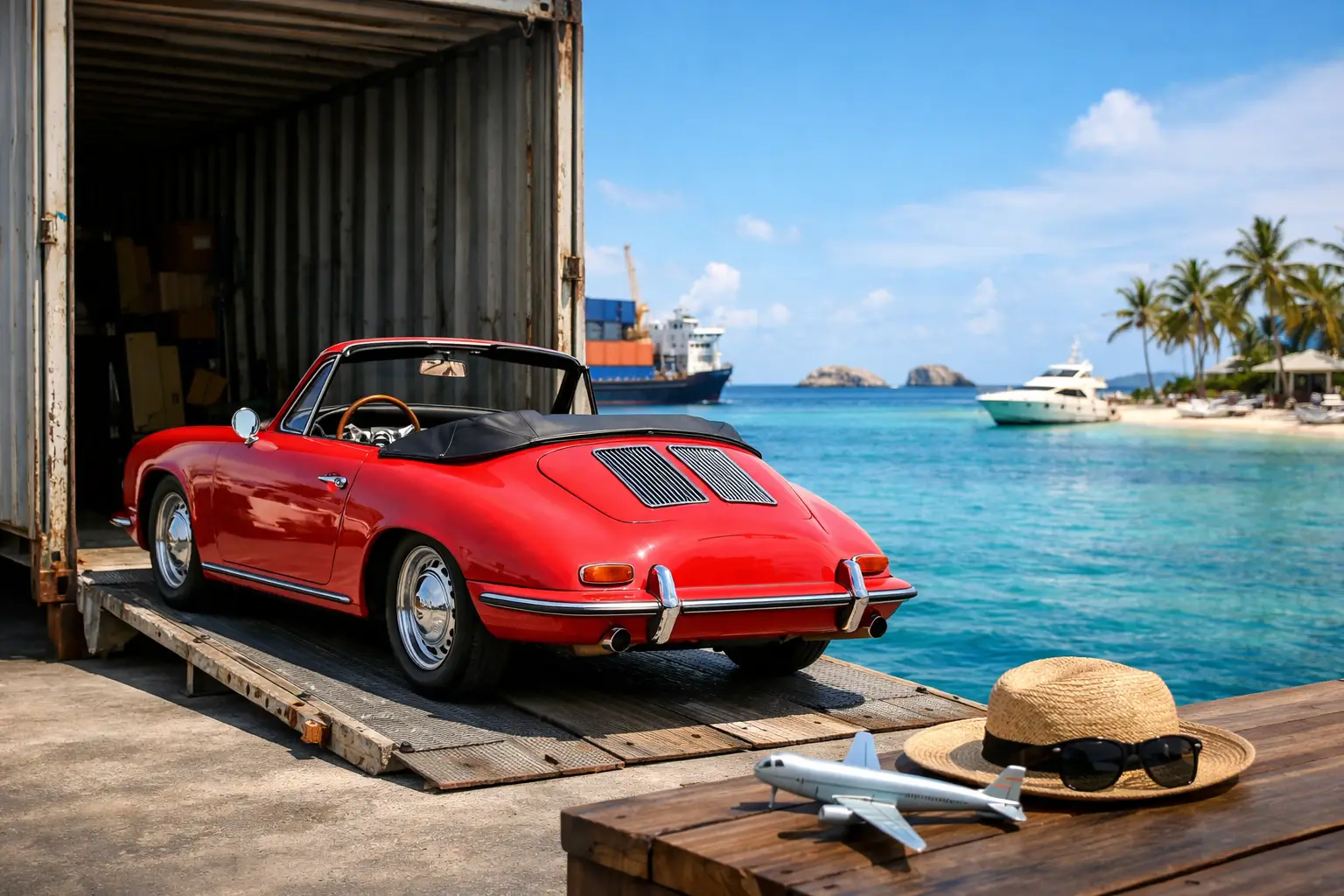
A classic car rarely arrives with a simple story. It may have crossed state lines, changed hands at auction, spent years in a private collection, or undergone a restoration that affects both its value and documentation. A classic car import to Cayman Islands requires more than arranging a vessel booking. It calls for a clear plan that protects the vehicle, supports an accurate customs declaration, and avoids preventable delays once it reaches port.
For collectors and owners, the priority is not simply getting the car to Cayman. It is receiving the correct car, in the documented condition, with its import process handled professionally from origin through final delivery.
Start With Eligibility, Condition, and Provenance
Before committing to a purchase, confirm that the vehicle is suitable for import and practical for use in Cayman. A car’s age does not automatically make it simple to import, register, insure, or maintain. The vehicle should be assessed against current Cayman requirements, including any applicable rules around roadworthiness, safety equipment, emissions considerations, and vehicle configuration.
This is especially relevant for older vehicles that have been modified. An engine swap, non-standard lighting, altered suspension, aftermarket exhaust, or a reconstructed title can affect how the vehicle is valued, inspected, insured, or registered. None of these factors necessarily ends the process, but each should be identified early rather than discovered after the vehicle is already in transit.
Provenance matters as much as presentation. A well-kept file should include the original title or ownership documents, bill of sale, vehicle identification number details, restoration invoices where available, photographs, and any appraisal or auction documentation. For a collectible car, these records help establish identity, condition, and value. They also provide useful protection if a question arises during customs processing or insurance arrangements.
Build the Landed Cost Before You Buy
The purchase price is only one part of the investment. The true cost of a classic car import to Cayman Islands includes transport from the seller to the departure port, export handling, ocean freight, marine insurance, local port charges, customs duties and fees, clearance, inspection requirements, licensing costs, and final delivery.
The duty treatment and customs value should be considered before funds are released. Customs valuation may rely on the transaction value and supporting documentation, and a price that appears unusually low without clear evidence can create questions. For vehicles acquired through private sales, estate transactions, or restoration projects, a complete paper trail is particularly valuable.
A classic car can also be expensive to move safely. The lowest shipping quote is not always the best value if it excludes proper handling, cargo protection, destination services, or support when paperwork needs attention. A transparent landed-cost estimate lets you compare options based on the full picture rather than an attractive freight rate alone.
Choose Shipping Around the Car’s Needs
Shipping method should reflect the vehicle’s value, condition, dimensions, and tolerance for exposure. For many classics, a dedicated or shared container is the preferred option because it provides a controlled environment and additional protection from handling and weather. It can also accommodate carefully packed spare parts, provided they are properly declared and safely secured.
Roll-on/roll-off shipping may suit an operational vehicle that can be driven on and off the vessel and does not require the extra protection of a container. It can be cost-effective in the right circumstances, but it involves different handling considerations and may not be appropriate for a freshly restored, low-clearance, non-running, or particularly rare car.
The condition of the vehicle at handover should be recorded thoroughly. Clear, date-stamped photographs of the exterior, interior, wheels, glass, engine bay, odometer, and any existing imperfections establish a baseline before transport begins. If the car is being collected from an auction, dealer, or private residence, confirm who is responsible for keys, loose accessories, documents, and loading instructions.
A classic vehicle should never be treated as ordinary cargo. Secure loading, appropriate tie-down points, battery and fuel preparation, and careful coordination with the origin facility all reduce avoidable risk.
Prepare Documents Before the Vessel Sails
Documentation is where many otherwise straightforward imports lose time. The precise requirements can vary based on the origin, ownership structure, vehicle history, and shipping arrangement, but the process generally depends on complete and consistent records.
Core documents commonly include proof of ownership, a signed bill of sale or purchase invoice, shipping documents, identification for the importer, and supporting evidence of the vehicle’s declared value. If the vehicle is financed, purchased by a company, inherited, or held in a trust, additional authorization or ownership records may be required.
Details must match across every document. The VIN, year, make, model, buyer name, seller name, and purchase amount should be checked carefully before shipment. A single digit error in a VIN or a mismatch between an invoice and title can slow clearance at the worst possible time – when the vehicle is already at port and storage exposure may be increasing.
It is also wise to separate original ownership documents from the vehicle during transit when possible and keep secure digital copies available. Originals may be needed for clearance and registration, while copies provide a practical safeguard if a document must be reviewed while cargo is moving.
Customs Clearance Is More Than Filing Paperwork
Once the vehicle reaches Cayman, the focus shifts to customs processing, payment of applicable duties and fees, and release from port. This stage requires accurate declarations, responsive communication, and an understanding of how the declared vehicle value is supported.
For a classic, customs questions may arise because market value is not always obvious. Two cars of the same model year can have very different values depending on originality, restoration quality, mileage, matching numbers, rarity, and documented history. A collector-grade example should be supported accordingly, while a project car should not be represented as concours-ready. Accuracy protects the importer and supports a cleaner clearance process.
After customs release, the vehicle may need to proceed through inspection, registration, and licensing steps before it can be used on the road. The sequence matters. Moving too quickly, or assuming a vehicle can be driven immediately after arrival, can create unnecessary compliance issues. A managed process keeps custody, clearance, and onward delivery aligned with the requirements that apply to the specific vehicle.
Protect the Car Through Final Delivery
Arrival at port is not the finish line. A classic car remains vulnerable during unloading, storage, inspection, and transport to its final destination. The handoff from international carrier to local delivery should be organized with the same care used at origin.
Before final delivery, inspect the vehicle against the pre-shipment condition record. Check body panels, trim, wheels, glass, interior surfaces, and mechanical condition where appropriate. If the car has been sitting for an extended period or traveled in a container, battery condition, tire pressures, fluid levels, and basic operating readiness deserve attention before it is driven.
For high-value vehicles, arranging enclosed or otherwise suitable local transport can be preferable to treating the final leg as an afterthought. The right approach depends on the vehicle’s condition and destination. A running driver-quality classic may have different needs than a museum-grade car or a vehicle awaiting restoration.
Where Professional Coordination Adds Value
A classic import combines several moving parts: seller communication, vehicle collection, export paperwork, shipping schedules, cargo insurance, customs documentation, duty planning, port release, inspection, and delivery. When each party handles only one portion, the owner can end up coordinating the gaps.
Waypoint Imports provides the value of a single, accountable process for owners who want their vehicle handled with precision from planning through delivery. That includes identifying requirements early, coordinating shipping around the car’s needs, maintaining visibility over documentation, and managing the local clearance process with complete professionalism.
The best time to involve an import specialist is before the purchase becomes final. A short review of the car, its documents, its origin, and its expected value can reveal issues that are inexpensive to solve before shipment and far more difficult to address after arrival.
A classic car deserves a careful first drive in Cayman, not a difficult first week at the port. Begin with the paperwork, shipping method, and landed cost clearly understood, then let every stage of the journey be handled with the same care that went into choosing the car.
