

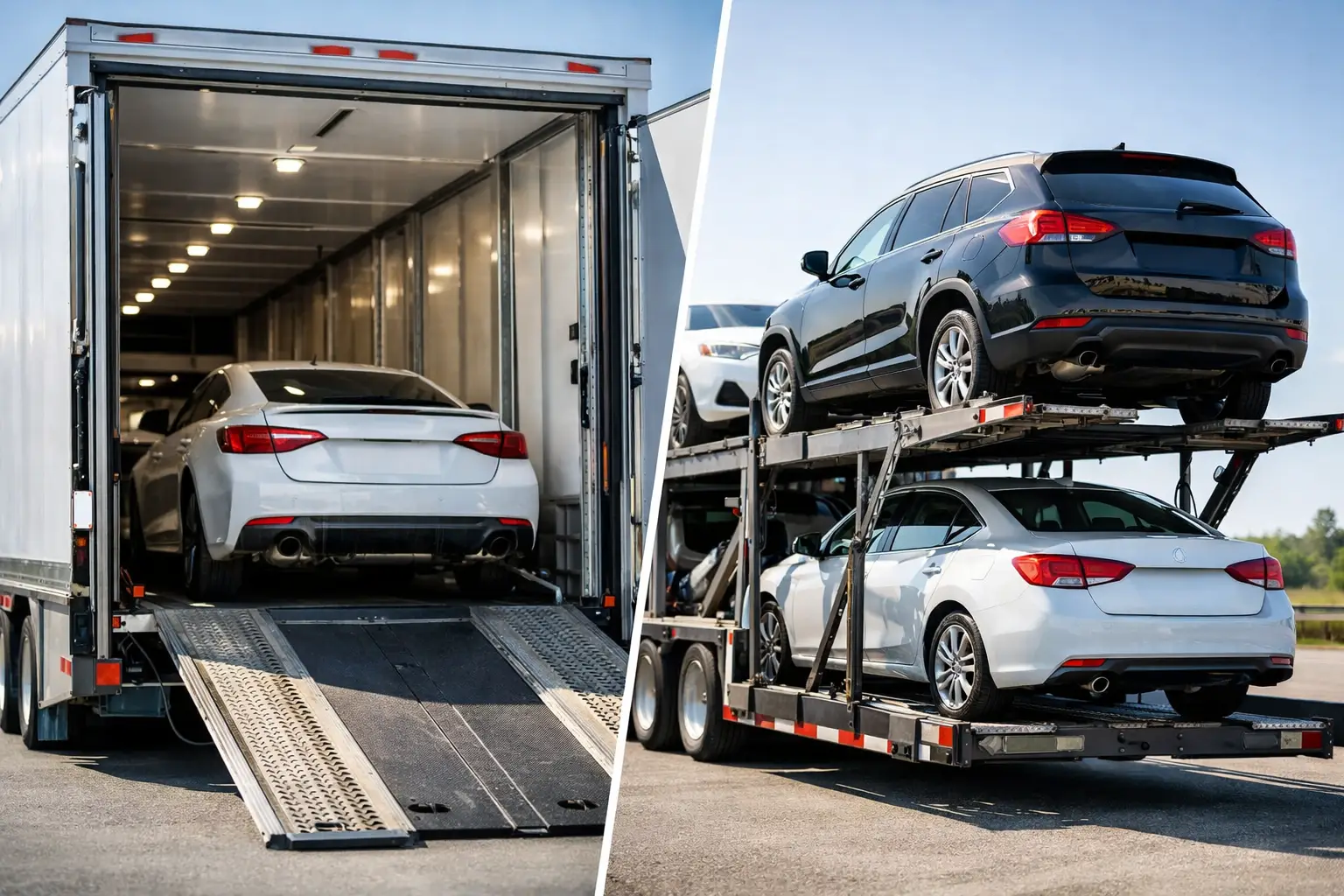
A vehicle can be perfectly selected, properly insured, and ready for export, yet still take on unnecessary risk before it reaches the port. The enclosed transport vs open carrier decision is often treated as a simple price comparison. For a high-value vehicle being imported to the Cayman Islands, it is better viewed as a protection decision that affects condition, scheduling, and peace of mind.
Both options are legitimate professional transport methods. The right choice depends on the vehicle, its value, its condition, the collection route, the season, and how much exposure you are prepared to accept before international shipping begins. A clear decision at this stage helps keep the rest of the import process organized and controlled.
What an Open Carrier Provides
An open carrier is the familiar multi-level truck used to move several vehicles at once. Vehicles are secured on an open trailer and remain exposed to weather, road debris, dust, and normal highway conditions during transit. It is the most widely available form of domestic vehicle transport in the United States and is commonly used for dealer inventory, auction purchases, relocations, and standard personal vehicles.
Its strongest advantage is value. Because an open carrier can transport more vehicles on one load, its cost is generally lower than enclosed transport. Availability can also be better on common routes, particularly between major markets and South Florida. For many late-model daily drivers in good condition, open transport is a sensible and efficient option.
Exposure is the trade-off. A properly secured car on an open trailer is not inherently unsafe, but it is subject to the environment around it. Rain, sun, airborne grit, and occasional road debris are possibilities. This may be acceptable for a standard SUV, sedan, or pickup, especially when the vehicle will be cleaned and inspected before export. It may be less appropriate for a recently detailed luxury vehicle, a low-mileage collector car, or a vehicle with a finish that requires exceptional care.
Enclosed Transport vs Open Carrier: The Practical Difference
Enclosed transport places the vehicle inside a covered trailer. The truck may carry fewer vehicles, but the cargo is shielded from weather and most road exposure. Many enclosed carriers are equipped for specialty vehicles, including low-clearance sports cars, classics, exotics, and vehicles that require careful loading procedures.
The protection begins before the trailer moves. Low-profile ramps, lift gates, and careful tie-down methods can reduce the risk of scraping a front splitter, underbody panel, or lowered suspension. That level of handling matters when a vehicle has limited ground clearance or expensive cosmetic components.
Enclosed transport also provides a more controlled presentation on arrival. A vehicle that has stayed protected from the road is easier to inspect, document, and prepare for the next stage of its journey. For a buyer who has just acquired a collector-grade automobile or performance car, avoiding preventable exposure can be worth more than the difference in transport cost.
That said, enclosed service is not automatically necessary for every import. It usually costs more, may have fewer available trucks on a given route, and can require more advance scheduling. Choosing enclosed solely because a vehicle is expensive can overlook the practical realities of the shipment. A well-maintained luxury SUV traveling a short, predictable route may be entirely suitable for open transport. The appropriate level of protection should match the actual asset and journey.
When Enclosed Transport Is Usually the Better Choice
Enclosed transport is generally the preferred option when condition preservation is a priority rather than a preference. This often includes collector cars, classic automobiles, exotic and performance vehicles, restored vehicles, low-clearance models, and cars with custom paint or delicate exterior finishes.
It is also a strong consideration for a vehicle that is being collected from a remote location or moving through areas with difficult weather. A longer overland route creates more time for exposure. If the vehicle is already in exceptional condition, the value of avoiding even minor cosmetic issues can outweigh the added shipping expense.
Buyers sourcing a vehicle through a private seller or specialty dealer may also benefit from enclosed transport because there is often more at stake in preserving a documented condition standard. Before collection, clear photographs and a condition report establish a useful baseline. When the vehicle reaches the port, a second inspection confirms whether its condition has remained consistent.
For many specialty imports, the decision comes down to one question: if a small chip, scratch, or weather-related issue occurred on the road, would the savings from open transport still feel worthwhile? If the answer is no, enclosed transport is likely the more suitable choice.
When an Open Carrier Makes Sense
Open transport remains a practical option for a large share of vehicle imports. It can be appropriate for standard personal vehicles, family SUVs, work trucks, and newer vehicles where ordinary highway exposure is an acceptable part of the logistics plan.
It is particularly useful when budget discipline matters and the collection route is straightforward. If the vehicle is located within a reasonable distance of its export point, the risk profile is lower than a cross-country move. Open service can also be the more realistic option when timing is tight and carrier availability is limited.
The key is to choose open transport deliberately, not by default. Confirm that the carrier is properly licensed and insured, understand the pickup and delivery window, and ensure the vehicle is inspected at collection and delivery. Remove personal belongings, secure loose accessories, and document existing marks before the driver loads the vehicle. These basic controls are valuable whether the trailer is open or enclosed.
Transport to Port Is Only One Part of the Plan
Domestic carrier selection protects the vehicle on its way to the departure port, but it does not determine the international shipping method. Once the vehicle reaches South Florida or another export point, it must be prepared for onward shipping, customs documentation, duties, clearance, and delivery in Cayman.
That distinction matters. A vehicle may travel to port in an enclosed trailer and then ship internationally through a different service designed for the ocean leg. The choices should work together. The condition requirements, port schedule, shipping method, required paperwork, and arrival arrangements need to be coordinated as one plan rather than handled as disconnected bookings.
For imports into Grand Cayman, Cayman Brac, or Little Cayman, the most effective approach is to establish the full transport sequence before the vehicle is collected. This helps avoid storage charges, missed sailings, incomplete documents, or a vehicle arriving before its clearance requirements are ready. It also gives you a clearer view of the true landed cost before you commit.
How to Make the Right Choice for Your Vehicle
Start with the vehicle itself. Consider its market value, replacement cost, condition, clearance, finish, and how difficult it would be to repair or replace. Then look at the route: distance, weather, pickup location, delivery timing, and whether a dependable carrier is available for the required dates.
Next, compare the added cost of enclosed service against the financial and practical consequences of damage or excess exposure. A lower transport quote is not always the lower-risk decision. At the same time, the premium for enclosed service should be justified by the vehicle and the route, not assumed as a requirement.
Finally, ask how the domestic move connects to the entire import schedule. The best carrier choice is one that arrives at the correct port, within the necessary window, with the vehicle documented and ready for the next stage. Precision at the beginning prevents unnecessary friction later.
Waypoint Imports coordinates vehicle import logistics with that full sequence in mind, from collection planning and international shipping through customs clearance and final delivery. Rather than treating transport as an isolated task, the focus is on keeping the vehicle protected and the process controlled from origin to arrival.
A carefully chosen carrier does more than move a vehicle from one point to another. It preserves the condition you paid for and gives the rest of your import plan the right foundation.
